Immigration, Refugees and Citizenship Canada (IRCC) continues to incorporate language proficiency as a key factor in several immigration pathways, reflecting the growing role language policy plays in immigration discussions worldwide. As governments refine selection systems to address economic needs, demographic challenges, and integration goals, language assessments have become a central topic in policy conversations. For many applicants, preparation for immigration increasingly includes demonstrating language proficiency through recognized examinations such as the Test de Connaissance du Français (TCF).
Language requirements have long been part of immigration systems in countries seeking to balance economic growth with social integration. Research published by the Organisation for Economic Co-operation and Development (OECD) shows that language proficiency often influences labor market outcomes, employment opportunities, and long-term settlement success among newcomers. As a result, governments continue to evaluate how language assessments fit into broader immigration frameworks.
French-language testing occupies a particularly important position in Canada, where bilingualism remains a significant aspect of national identity and public policy. Programs designed to attract French-speaking immigrants outside Quebec have expanded in recent years, while policymakers continue to debate how language requirements should be structured to support both economic and demographic objectives. Similar discussions can be observed in other multilingual jurisdictions where language skills are considered indicators of integration potential.
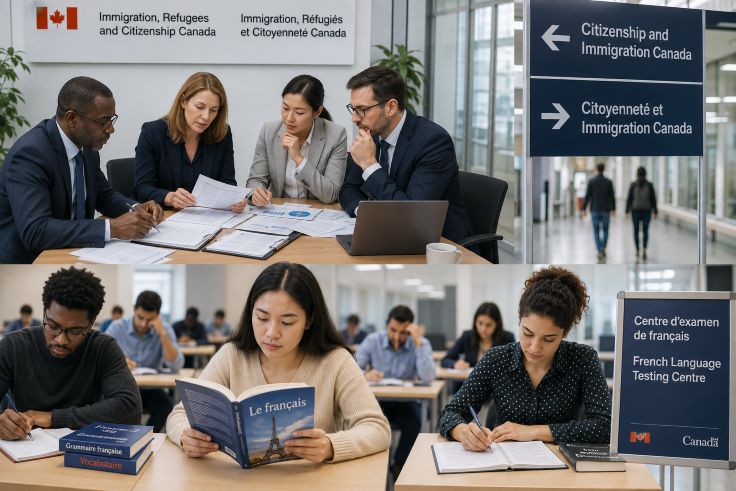
How French-Language Assessments Fit Within Immigration Systems
French-language proficiency tests such as the TCF are used to evaluate an applicant’s ability to communicate in listening, speaking, reading, and writing. Governments and immigration authorities often rely on standardized assessments because they provide measurable benchmarks that can be applied consistently across large applicant pools.
Data from Immigration, Refugees and Citizenship Canada indicates that language ability remains one of the strongest predictors of economic integration among immigrants. Consequently, language testing serves several functions simultaneously. It helps determine eligibility, supports point-based selection systems, and provides policymakers with a standardized method for assessing applicants from diverse educational and cultural backgrounds.
These assessments are increasingly discussed in political and legislative debates because language policies affect who qualifies for immigration opportunities and how governments pursue broader public policy goals.
5 Ways French Language Testing Policies Influence Immigration Debates and Policy Reforms
1. They Shape Immigration Selection Priorities
Language testing policies often reflect broader government priorities. When policymakers increase the weight assigned to French-language proficiency, they signal a preference for attracting individuals who can contribute to bilingual communities and labor markets.
Experts note that immigration selection systems are frequently adjusted to address economic demands, population growth targets, and regional development strategies. Language assessments become a practical mechanism for implementing these priorities because they provide measurable criteria that can be incorporated into immigration scoring systems.
Debates frequently arise regarding how much importance language proficiency should receive compared with education, work experience, or professional qualifications. These discussions can influence future legislative proposals and policy revisions.
2. They Influence Regional and Demographic Strategies
French-language testing policies are often connected to demographic objectives. Canada has introduced initiatives aimed at increasing the number of French-speaking immigrants settling outside Quebec, reflecting concerns about maintaining vibrant francophone communities across the country.
Reports from the Office of the Commissioner of Official Languages highlight the importance of immigration in supporting the long-term vitality of minority language communities. As governments pursue demographic goals, language assessments become part of broader conversations about population distribution, cultural preservation, and regional development.
Legislators and policymakers frequently examine whether current testing requirements effectively support these objectives or whether reforms are needed to improve outcomes.
3. They Affect Labor Market Policy Discussions
Research conducted by the OECD and other international organizations suggests that strong language skills can contribute to improved employment outcomes and workplace integration. Because of this relationship, language testing policies are often linked to labor market strategies.
Governments facing workforce shortages may adjust immigration pathways to encourage applicants with language competencies that align with economic priorities. Discussions surrounding these policies often focus on balancing employer needs with accessibility for prospective immigrants.
Some policymakers advocate for stronger language requirements to facilitate workplace communication, while others argue that excessive barriers could limit access to skilled talent. These differing perspectives contribute to ongoing immigration policy debates.
4. They Generate Discussions About Fairness and Accessibility
Language testing requirements regularly become subjects of public debate because they directly affect applicant eligibility. Critics sometimes question whether standardized tests create unintended barriers for otherwise qualified candidates, while supporters argue that objective assessments help maintain consistency and transparency.
Studies cited by the Migration Policy Institute indicate that language requirements can influence immigration outcomes in significant ways. As governments review immigration programs, questions about affordability, access to testing centers, and preparation resources often emerge.
These discussions frequently lead to policy reviews aimed at improving fairness while preserving the integrity of immigration selection systems.
5. They Drive Ongoing Legislative and Policy Reform Efforts
Immigration systems are constantly evolving. Changes in economic conditions, demographic trends, and political priorities often prompt governments to revisit language requirements.
Data indicates that countries regularly adjust immigration frameworks to respond to shifting labor market needs and integration objectives. Language assessments become part of these reform discussions because they represent a measurable and adaptable policy tool.
Legislative proposals may involve modifying language thresholds, introducing targeted pathways for French-speaking applicants, or revising how test results are incorporated into immigration scoring systems. These discussions often become part of broader immigration policy conversations that examine how selection criteria, labor market priorities, and integration objectives should be balanced. Each change contributes to ongoing debates about the future direction of immigration policy.
The Growing Role of Language Certification Pathways
As language requirements become more prominent within immigration systems, applicants increasingly view certification pathways as an essential component of their immigration planning. Standardized assessments such as the TCF provide a recognized method for demonstrating proficiency and meeting program requirements.
Preparation strategies often include structured study programs, practice examinations, and targeted language training. These efforts reflect the practical reality that language scores can influence eligibility, ranking positions, and access to specific immigration streams.
The growing emphasis on language preparation also illustrates how policy decisions influence applicant behavior. When governments modify language requirements, prospective immigrants often adjust their educational and certification plans accordingly.
Language Requirements, Labor Markets, and Public Policy Goals
Language testing policies sit at the intersection of several public policy objectives. Governments seek to attract talent, support economic growth, encourage successful integration, and strengthen linguistic communities. Standardized assessments help policymakers pursue these goals through transparent and measurable criteria.
At the same time, policymakers must balance competing priorities. Strong language requirements may support integration objectives, while flexible pathways may expand access to skilled workers. Finding the appropriate balance remains a recurring challenge within immigration policy development.
Evidence from international migration research suggests that language proficiency will continue to play an important role in immigration frameworks. As economies become more interconnected and competition for talent increases, policymakers are likely to continue refining language assessment requirements.
Conclusion
French-language testing policies have become an influential component of modern immigration systems. They shape selection priorities, support demographic strategies, influence labor market discussions, raise questions about accessibility, and contribute to ongoing policy reforms. Assessments such as the TCF illustrate how language certification intersects with broader political, economic, and social objectives.
Future immigration debates will likely continue examining the role of language proficiency within selection systems. As governments adapt immigration programs to changing demographic and economic realities, language assessment requirements are expected to remain a significant feature of policy discussions and reform efforts around the world.
Read More



 News and media have always been essential in shaping people’s perceptions of the world around them. With the increasing reach of technology and the internet, it has become easier for people to access information and news from various sources. However, with the rise of fake news, misinformation, and propaganda, it has become increasingly challenging to differentiate between what is real and what is not. In this article, we will explore the realistic implications of news and media and how they affect individuals and society as a whole.


 Media within the U.S. comprises several differing kinds of widespread communication: television, radio, cinema, newspapers, magazines, and Internet-based websites (especially blogs). Many of those networks are controlled by large, for-profit corporations that reap revenue from advertising, subscriptions, and also the sale of copyrighted material. American media conglomerates tend to be leading global players, generating substantial revenue, to not mention fierce opposition in many parts of the globe. Further deregulation and convergence are underway, suggesting more mega-mergers, a greater concentration of media ownership, and therefore the emergence of multinational media conglomerates. Critics allege that localism (local news and other content at the community level), media spending and coverage of reports, and variety of ownership and represented views have suffered as a result of such processes.
 To say this will be a heated political season may be a real understatement. Children don’t seem to be proof against the rhetoric in campaign ads, the toxicity which can often arise on social media, or even to the emotionally charged discourse among friends or relations. How are our youngsters impacted, and what can we do to help them to remain mentally healthy?
 If your vehicle is unlawfully on the personal estate – for instance, in an exceedingly private carpark and you haven’t paid or are over time – the owner incorporates a right to induce a tow-truck operator to get rid of your vehicle. This right rests on an old legal remedy called “distress damage feasant,” which lets a landowner seize something illegally on their land that has caused the damage. Here, the value to the landowner of moving your vehicle counts as “damage,” and then they will use this remedy.


 It appears that following the controversies of the government in office as well as the 2016 presidential elections, more people are choosing to stay. A lot of men and women believe it may be perplexing or polarizing, which is authentic. There is never an excuse to decide not to listen to current affairs or politics. Choices and Legislation may cause.

 Political journalism is a vast branch of journalism including the protection of elements of politics together with political science, although the word generally refers specifically to coverage of civil governments together with political authority.


 These karaoke rooms, which are privately owned, enable the people to show their feelings which might be otherwise inhibited in a formal setup. In that regard, leisure is made political. It is the self-disclosure of who is able to get there, who is listened to and who is in the background.
 The way the comments and reviews of readers influence the discourse of people, governments need to hear their voice and modify policies.
 At a time when employee well-being is a top priority across office hubs and wellness spaces, South Korea is turning spa culture into more than just a health solution; it’s now a strategic economic and diplomatic asset. The government’s push for public wellness isn’t just about healthcare. It’s about growing the economy, creating jobs, and making the wellness lifestyle more accessible to everyone.
 As climate and environmental issues continue to dominate news and political debates, more car owners are starting to pay closer attention to how the sun and pollution affect their vehicles. Rising temperatures, changing weather patterns, and even city regulations are all reasons why investing in a quality car cover or pro UV gear is becoming less of a luxury and more of a smart choice.
 Nangs, or cream chargers, are small canisters filled with nitrous oxide (N2O)


 Understanding the Hazards of Glass Buffing